Money in the Consulting Room: Founding Cohort

Money is in every session, even when no one mentions it. The fee carries the client’s history and ours, and when it surfaces, it rarely stays practical.
A client leaves an unhappy session and later asks for a discount, or disputes the charge with their card company. Another pays late every month, and you keep sending the same reminder. Someone says the fee is too high for what they’re getting, or asks, “Do you actually care, or is this just for the money?”
Beneath these exchanges, much more than money is brewing, and it stirs up our own money story too. Many of us mean to look at that story but put it off, because it feels daunting to do alone.
This series offers a small group of colleagues and experiential exercises to explore it together, and to find steadier ways to respond.
4 sessions · every other week · 90 minutes · live on Zoom · 4–8 participants · no recording
What you’ll leave with:
A way to reflect on money topics in the consulting room that moves you forward in clinical treatment rather than being stuck on emotional reactions.
A clearer sense of your own money story, and how it shows up in your fees, policies and therapeutic relationships.
A clinical lens on payment, so you can see what a missed payment or a fee complaint might be saying.
A steadier way to respond to fee disputes, late payments, “this isn’t worth it,” and “you’re only here for the money,” without getting defensive or caving in.
Experiential learning exercises to work through challenging topics with possible voluntary demo.
This course won’t hand you a script for handling money. Instead, it offers a framework for reflecting on your own style, shaped by your relationship with money, and a space to work out what fits your practice and your life right now. Your approach may change over time, and the course is designed to leave room for that.
What Happens Each Week?
Therapy is both a caring relationship and a paid one. We look at what that means for our clients and for us: wanting to be paid, and depending on the people we help.W1. What the money means
Theory · Clinical Discussion
Our beliefs about money come from family, culture, class and training long before we set our first fee. We explore where yours come from and how they show up in your work.W2. Your money story
Experiential Learning · Clinical Discussion
Setting, raising and holding a fee stirs up more than we expect. We work with what comes up for you when you are setting and negotiating fees or when you try to raise the fee.W3. The fee in the room
Clinical Discussion · Experiential Learning
Fee disputes, late payments and other challenging moments carry meaning. We explore ways understand them and respond to them.W4. When payment falters
Clinical Discussion · Theory
Who it’s for
This is an advanced training rather than an introduction. It’s best suited to clinicians with 4,000+ clinical hours who have faced money challenges in their own practice and enjoy going deeper, staying with ambiguity and looking at what’s underneath.
Licensed practitioners from any setting are welcome, as long as they’re willing to reflect on their own relationship to money and how it shows up in their clinical work.
We meet as a learning and consultation group, not as therapy, clinical supervision or business coaching, and the course offers no financial or legal advice. The facilitator does not assume clinical responsibility for participants’ cases.
Because personal material can surface, participants need to be in ongoing individual therapy and individual clinical supervision or consultation throughout the series.
Sessions are held in both Mandarin and English. Participants should understand both languages and are welcome to speak in whichever feels most comfortable.
Fee and Payment
USD $300/RMB¥2020. Among which, $150/¥1010 is due when you sign up and hold your spot, and the remaining $150/$1010 is due on the day of the first meeting.
If you cancel 10 or more days before the first session, you’ll receive a 90% refund of what you’ve paid (i.e., 135USD or 909RMB minus processing fee) . Cancellations made less than 10 days before the first session are not refunded. Live sessions are never recorded, to protect the privacy of the group.
As founding members, you’ll help enrich the program and receive free, time-limited access to additional course materials released in the future.
Certification and CEs
Participants receive a certificate of attendance documenting up to 6 live hours. This course is not currently approved for continuing education by any licensing board or CE approval body (such as NBCC, APA or ASWB). Depending on the laws and regulations of your state or jurisdiction, these hours may count toward your continuing education requirements. Licensees are solely responsible for confirming whether and how these hours apply to their license renewal.
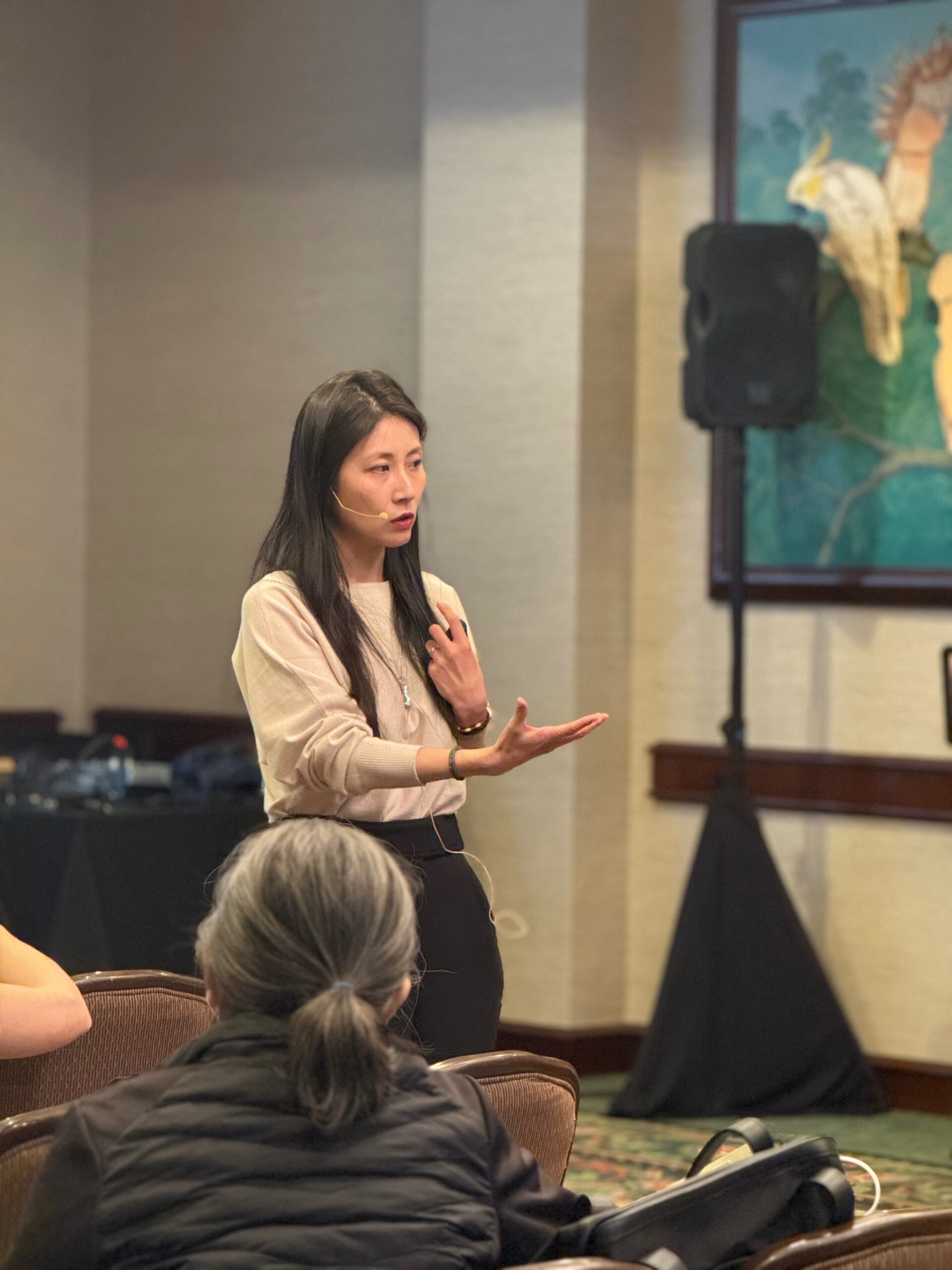
Meet Camilla Xiao Yu
With over 10,000 clinical hours, I’ve worked with money in the consulting room from many sides: in higher education, in a nonprofit agency, in insurance-based and for-profit settings in the US, and in self-pay private practice in both the US and China.
Along the way, I moved from nonprofit work, where it felt almost wrong to think about money, to private practice, where I had to navigate the insurance maze and discussing fees directly with people I work with. Money is rarely taught in clinical training and receives little attention in the clinical literature, which is part of why I created this course.
I’ve been teaching, training, and facilitating groups since 2012. I’m formally trained in Gestalt therapy and psychodynamic psychotherapy, and I practice from a relational, developmental and somatic orientation.
Frequently Asked Questions
Do I need to be in private practice?
No. This course focuses on handling money directly with clients. But this also applies to therapists in institutions.
Will I have to share personal financial information?
No. The exercises are only about your feelings and meanings around money as they pertain to clinical practice.
What if I miss a session?
Live sessions are never recorded, to protect the privacy of the group. But you’ll receive summary and reflection prompts.
Is this group therapy?
No. Personal material may come up and will be treated with care, but deeper work belongs in your own therapy or supervision.